













Tai-ginjo[Tai Ginjo (sea bream sake)][Noun/Verb]
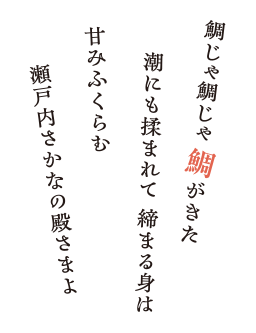
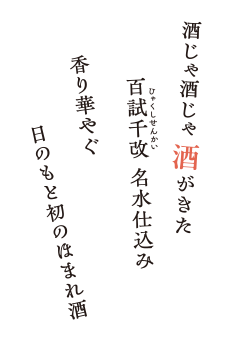
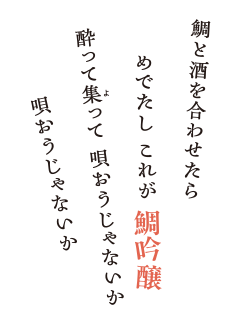
❶A true Hiroshima classic. A combination of two culinary treasures that Hiroshima is proud of. | When you think of Hiroshima... —— "The discerning customer —— I'll order it. Today —— Let's celebrate with this! [Sea bream caught in Hiroshima are nurtured by the strong currents of Japan's largest tides and the bounty of the beautifully abundant rivers. In spring, they are called cherry blossom sea bream, and in autumn, maple leaf sea bream. The fact that the taste changes with the seasons is also part of their charm. The ginjo sake born in Hiroshima is also brewed with the pure water that nature has refined, producing a fine and rich umami flavor and a gorgeous, fruity ginjo aroma.] ❷ Enjoy the pairing of sea bream, with its elegant white flesh and delicate yet profound flavor, and the fragrant and rich ginjo sake that originated in Hiroshima. | "Whether you're a Hiroshima local or just visiting Hiroshima, if you want to eat something delicious, you won't be disappointed."—— Try it!
Nama-taiginjo[Nama Tai Ginjo] [Name, Sa-type] ❶ The first use of Tai Ginjo. Enjoy Tai Ginjo with uncooked sea bream, such as carpaccio, prosciutto-wrapped, kelp-cured, or namero. — "The first drink should be —" "Open your mouth with —" "For kelp-cured, — is the only choice" [The charm of raw sea bream lies in its delicate sweetness and transparent umami. When pairing it, a type with a gorgeous ginjo aroma and fresh acidity, and with few off-flavors, will do its job. The aroma of the sake enhances the elegant aroma of the sea bream, and the light acidity pleasantly cuts through the fat, leaving a clean finish. For thinly sliced sashimi, use a highly aromatic sake, and for thicker slices, use a full-bodied sake. This combination does not interfere with the taste of the ingredients themselves, but enhances the delicate qualities of each.] ❷ Relying solely on the inherent qualities of the ingredients, face the sake head-on. —"First, chill it well and try it. You'll be surprised by the sweetness of the sea bream!"

Yaki-taiginjo[Grilled Sea Bream Ginjo] [Noun, Sa-type conjugation] ❶ The second use of sea bream ginjo. Enjoy sea bream ginjo with dishes that have a grilling element, such as salt-grilled, miso-grilled, steamed, or pan-fried. — "Nothing beats the aroma of —" "Let's go with — tonight" "You can't finish with —" [By grilling, the sea bream takes on an aroma and its umami is greatly concentrated. Accompanying the complex flavor produced by the Maillard reaction are types with mature umami and moderate richness, or a sake that has an aroma. The umami of the sake overlaps with the aroma of the grilled skin, making you feel the concentrated flavor of the flesh in a three-dimensional way. A glass brought back to room temperature is also a good match for the aroma of the skin. The food and sake complement each other's depth, leading to a satisfying aftertaste.] ❷ The sake's depth is used to receive the aroma and umami. —"Try it with one that's been grilled until the skin is crispy. You won't be able to stop eating it!"

Ni-tai Ginjo[Boiled Sea Bream Ginjo] [Noun, Sa-type conjugation] ❶ The third use of sea bream ginjo. Enjoy sea bream ginjo with boiled or steamed dishes such as simmered fish, steamed fish, and fish head stew. — "When it gets cold, it's time for —" "When fish head stew is served, it's a sign that it's time for —" "It's a long drink with —" [The umami of the broth and seasonings slowly permeates the sake, creating depth in the flavor. Pair it with a type of sake that has a mild aroma and a solid umami, or a sake with a sense of maturity. The umami derived from the rice blends with the broth, creating a sense of unity in the whole dish, and the moderate acidity gives a pleasant finish. If you warm it from lukewarm to warm, the umami and sweetness will expand, and the harmony with the delicate umami of the broth and sea bream will deepen even further. The ingredients, broth, and sake become one, creating a deeply flavorful aftertaste.] ❷ The key is to use temperature ingenuity to blend the food and sake together. —"Sake isn't just for drinking chilled. Try warming it up!"

Both people from Hiroshima and people who have come to Hiroshima,
If you want to eat something delicious,
You won't regret it, so give "Tai Ginjo" a try!
For the first timeTai Ginjo
To enjoy Tai Ginjo sake, here are some recommended pairings.
Presented in chart format.






Winner of the 2025 Hiroshima Book Award
Koji Shimizu,
At a store in Hiroshima
A record of the food and drink pairings I enjoyed.
We'll deliver it to everyone.
stay tuned!
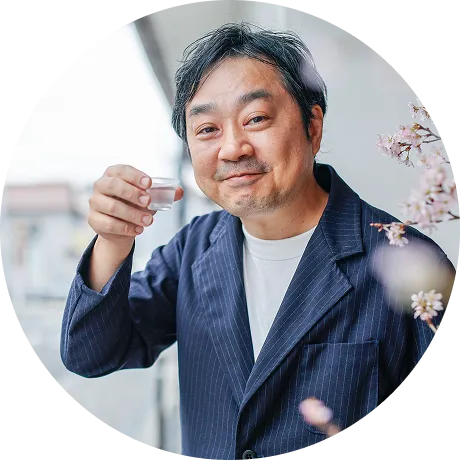
A writer, editor, and author from Hiroshima. In 2026, his travelogue of Saijo, a city known for its sake, "Kurakura Saijo" (The Media John) won the "15th Hiroshima Book Award (Nonfiction Category)." In 2019, his book "Won't You Share Your Love and Courage?" (Shogakukan) won the "9th Hiroshima Book Award (Novel Category)." He is the first to win both awards. He is also active in the unit "Honto BOYS" with illustrator Kamigaki Hirofumi.